Photography lecturer Epha J. Roe opens new show at Ridgebank Gallery

  • Published

    18th August 2025

  • Share

These Rooted Bodies debuts new work that ranges from sound art and cyanotypes to a live oak tree.
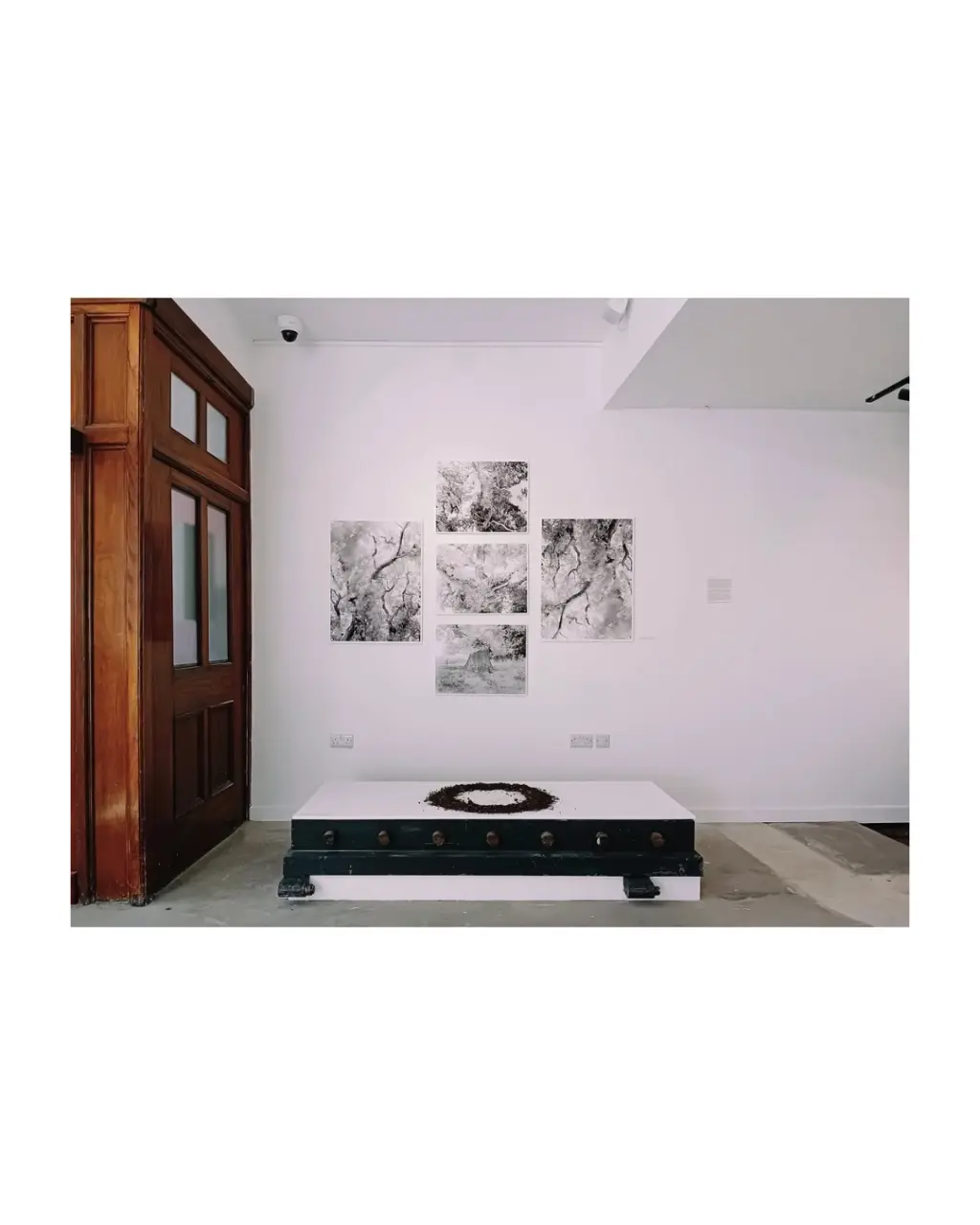
Artist and photographer Epha J. Roe debuts new work in a their fifth solo-show, open now at RidgeBank Gallery in Kington.

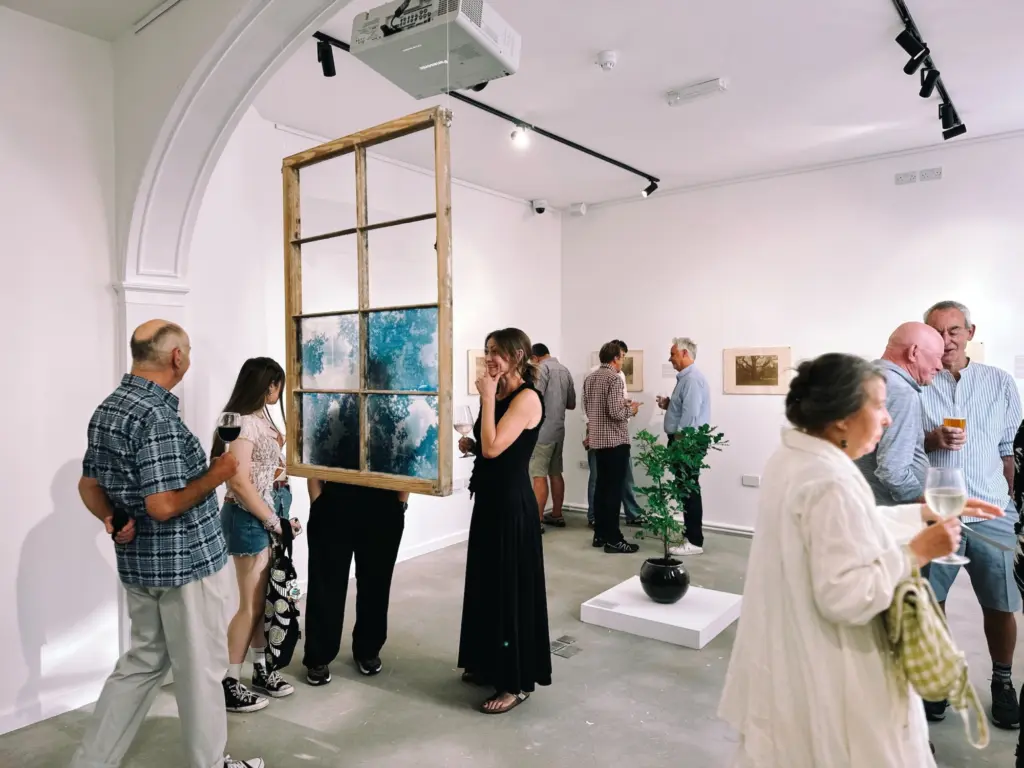
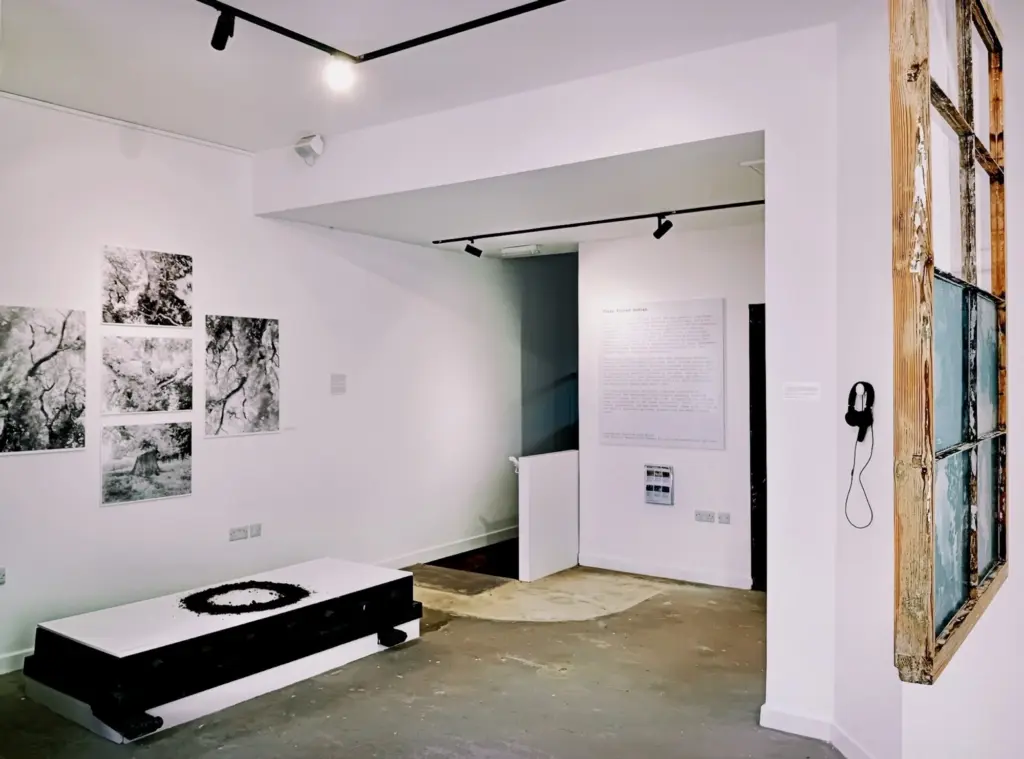
Comprising of around thirty photographs, a living tree, sculptural elements, research ephemera and sound, These Rooted Bodies is a multidisciplinary, holistic encounter with England's oak trees that moves beyond the trees as mere visual subjects to instead consider how images might be made with them.

The show is open to the public now, closing on September 26. 

It fundamentally changed the way I make images. Part of my question was how I could realistically make work with the trees, not just of them, which forces you to think of photography in a completely different way.

Epha j. Roe
Curated by Caroline Allen - a recent MA Curating graduate - the show is split into three sub-sections: Arboreal Encounters, Organic Impressions and Perceiving Phytochrome

These Rooted Bodies explores the culture, science and history of English oak trees through the lens of photography through material, theory and practice. By drawing on historical processes by Fox Talbot that used gallic acid to produce the first photographic developer, this exhibition also explores the oak's material significance in the history of photography, re-contextualising it in what Giovanni Aloi describes as art's "vegetal turn".

Epha will be part of the BA(hons) Photography team from this September. We caught up with them for a quick Q+A about their show.

Q: The show sounds fascinating - what set your research into (/practice responding to) this subject in motion?

A: Thank you, I'm so happy to hear that. Its origins are actually quite different to what it now represents. It began in 2018 as a response to the 2016 European Union referendum and the rise in hate crime towards marginalised groups in the UK at that time. I wanted to find and photograph particular places in England that represented how the country was built on multiculturalism, to effectively undermine fascist ideologies of a historically white England. Folk history, customs and music had, around that time, been used by the far-right British National Party (BNP) to paint a vision of England as a monoculture that had been derailed by migration. Because of this, I wanted to use folklore myself to subvert nationalist ideas of English history, which then led me to certain materials that represented Englishness in some form or another. 

I originally chose oak, straw and chalk and had ideas of exploring landscapes through these materials. To begin, I chose oak, and then came across the book "The Hidden Life of Trees" by Peter Wohlleben (2015), which spoke of how trees communicate with each other underground through the use of fungal networks. From that the work morphed and I became more interested in the cultural history of plants. There remain threads of folklore in These Rooted Bodies as the oak is a prominent feature in English history, however my motivations and interests became far more green as time went on.


Q: Is there a single piece/element in the exhibition that you think unlocks the exhibition for the viewer?

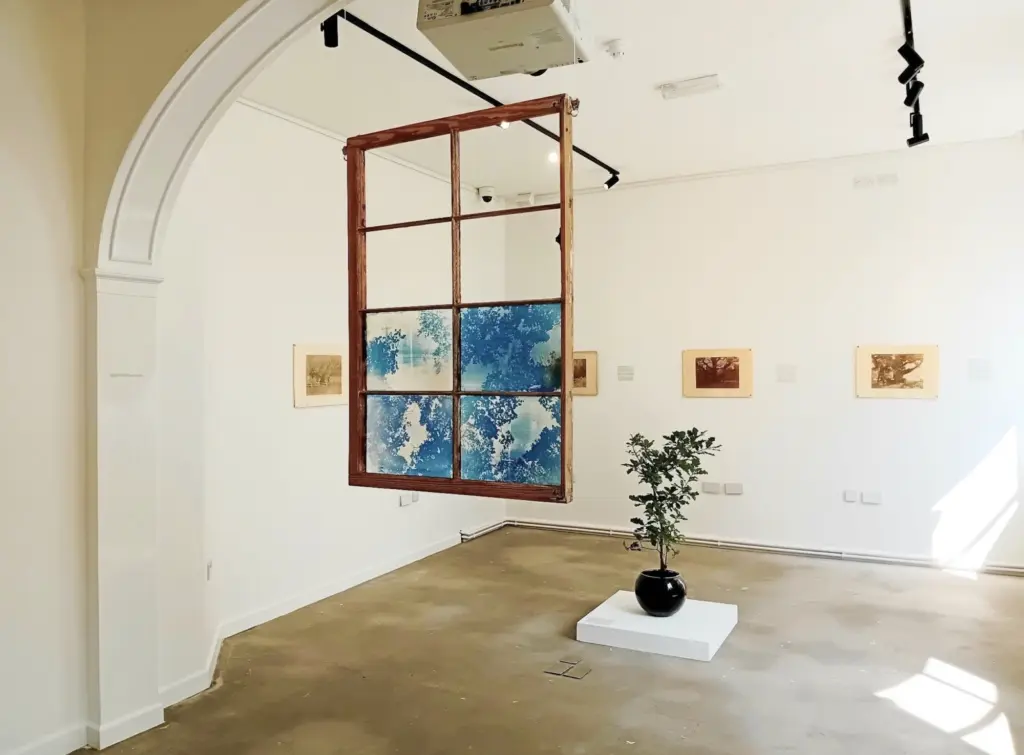
A: For me, it's probably the seven-year-old living oak tree. A lot of talk in the later stages was about how art exhibitions and projects about plants can become less about humans and more about the plants themselves. This can be a tricky thing to get right as art is, of course, a human activity. It seems relatively simple to combat this by having a living representation of the art-subject in the actual space, but galleries aren't traditionally made for housing plants over long periods of time. 

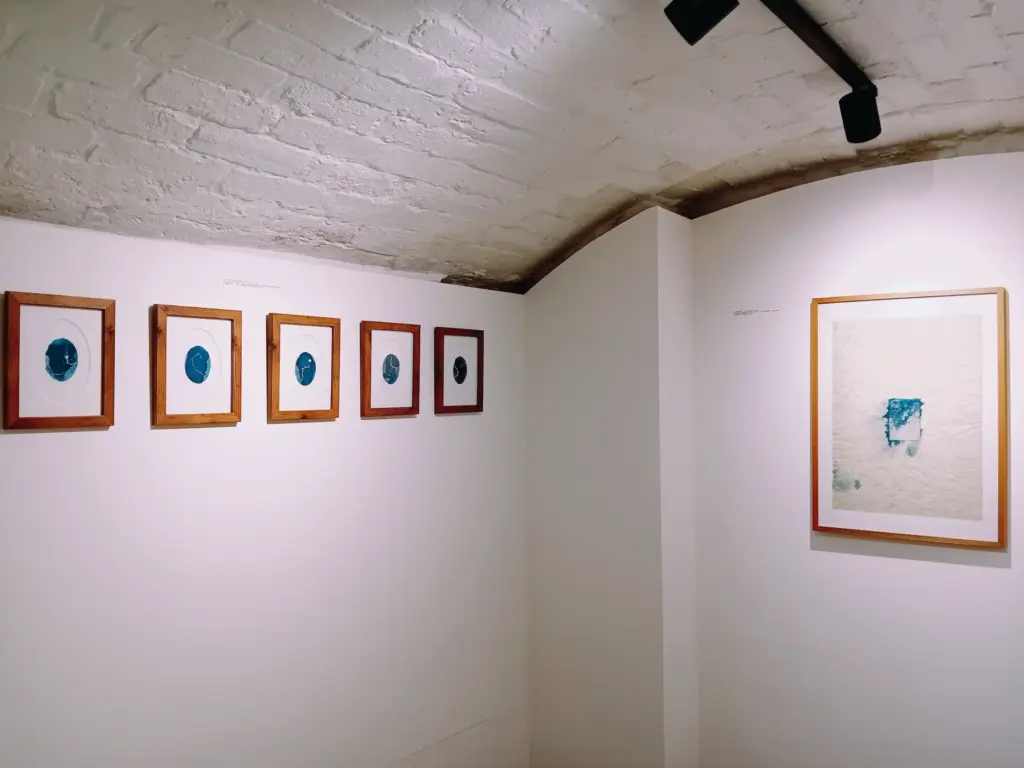
What it does do, however, is create a unique situation where the gap between art made about plants and the plant itself are actually within the same physical space. There are also pieces in the show that were made from the living tree, such as a series of "Rhizotypes" in the gallery's basement, so audience members are able to make physical connections between different areas of the gallery that they can then relate back to the living tree. At the moment, the oak is infested with galls which also feature as the subject of my series "To grow to fall to gather". These connections are important as they draw out an emphasis of the plant's animacy - how plants are alive - which can sometimes be difficult to express in still photographic images.


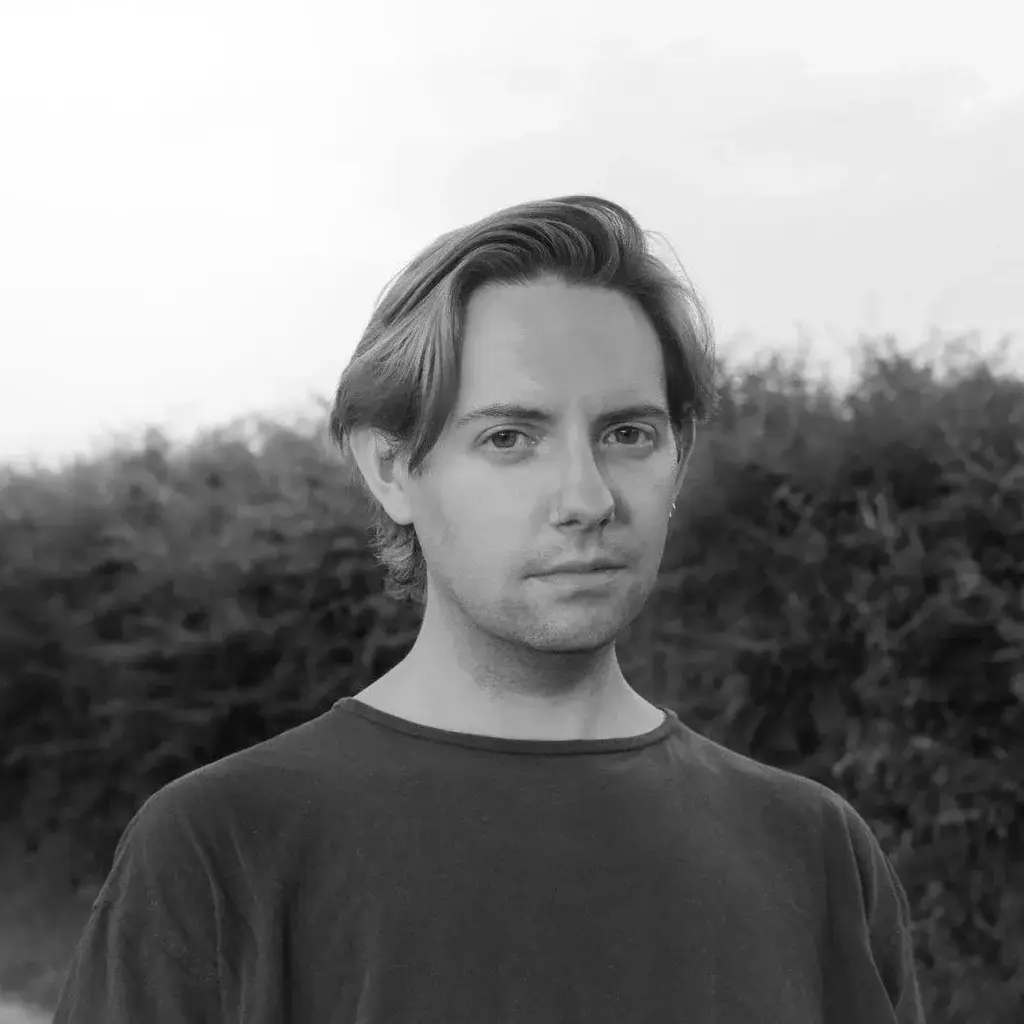
Epha J. Roe. Portrait by Mike Raven

Discover more about Epha J. Roe

Epha's practice concerns the relationship between humans and the wider natural world with a particular emphasis on the cultural history of individual plant species. As part of their approach they often incorporate organic matter into photographic processes or use photographic methods that visualise or refer to a plant’s biological functions. Find out more about Epha's work using the link below.

Visit Epha's website
Explore RidgeBank Gallery

RidgeBank is a contemporary art space in the heart of Kington. Renovating the former Kington and Radnorshire Bank, it has breathed life into an empty high street building and contributed to the existing vibrant creative community within the town. RidgeBank’s programme of exhibitions and events are diverse in media and theme, often reflecting the rural.

Explore RidgeBank on Instagram

Q: As a photographer and artist, how does the process of working so closely with natural elements change your relationship with image-making?

A: In short, it fundamentally changed the way I make images. Part of my question was how I could realistically make work with the trees, not just of them, which forces you to think of photography in a completely different way. In part, this has meant almost all elements of my practice are analogue apart from the scanning and digitising of film negatives. However, it also taught me about how plants, and in particular oak trees, were present in early photographic processes. And contributed, through their chemistry, to the development of photographic technology. As photography can often feel like a less tangible, more technology-based and perhaps non-organic discipline, this knowledge of photography's history changed my perspective of what photography is, how it came to be, and how it might continue to develop in the future.


Q: How is sound - and space - designed to affect the experience of the work and visitors?

A: Included in the show is the audio piece "Our Roots", which I made in collaboration with the sound artist Joe Davin, and can be listened to on headphones in the main gallery. The audio was designed as a way for audiences to access some of the ideas explored in the work without having to read vast swathes of text. It moves through each sub-project and refers to a real oak tree in Kington (where the gallery is situated) which I used as the subject for my series "Perceiving Phytochrome". 

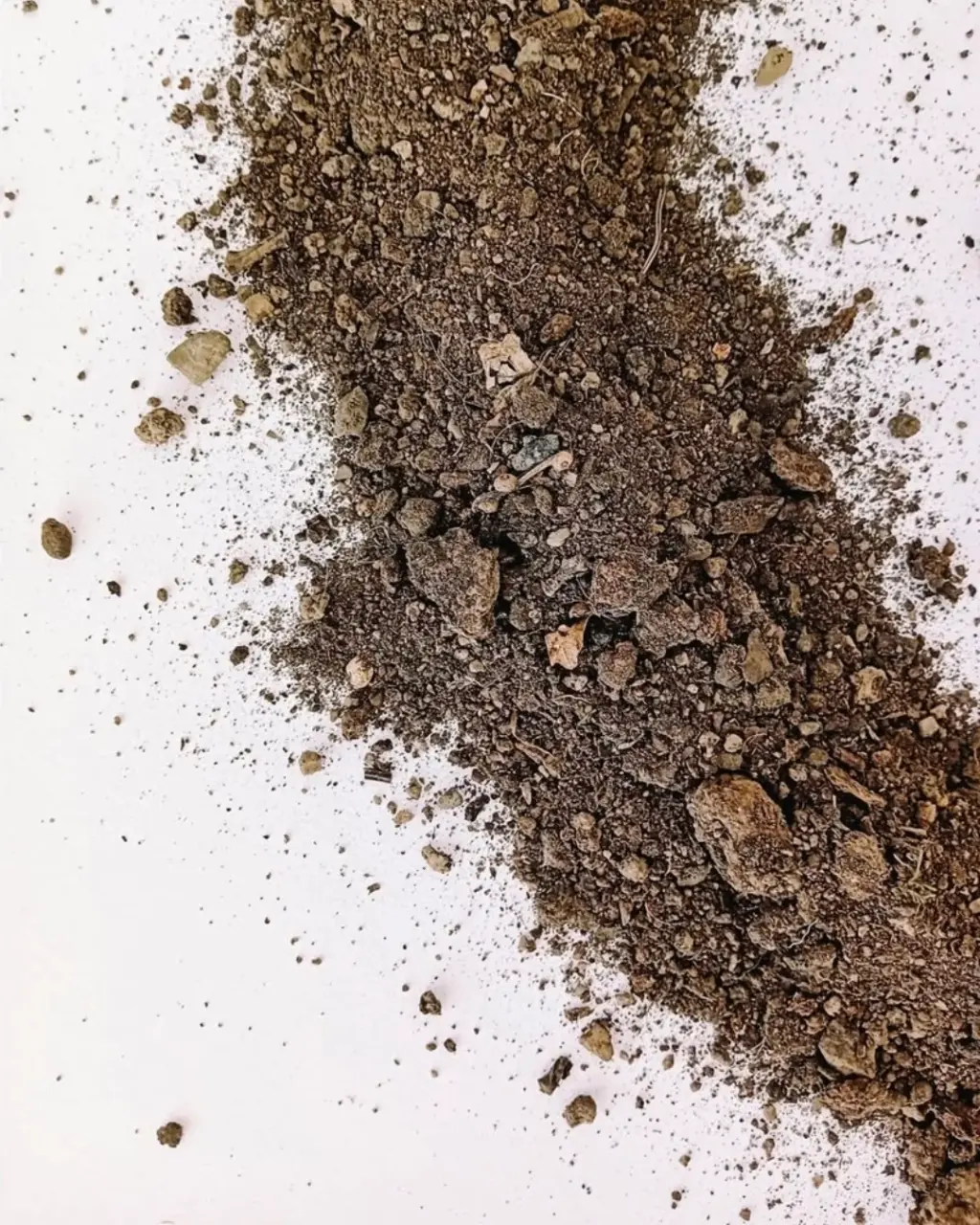
Audience members can, if they choose, then walk from the gallery to the oak tree in Hergest Croft, creating further spatial connections between nature in the gallery and nature outside. Curatorially, the show is organised to create openness between the works, allowing the photographs, objects and sculptural elements space to breathe. There are also components of display that mimic the subject matter. For example, the project "Organic Impressions" - which features work both depicting and made with roots and soil - is displayed downstairs, requiring visitors to move physically underground in order to see them. In short, there are many poetic elements built-in to the curatorial strategies that are ecologically derived.


Q: In creating These Rooted Bodies you worked at the intersection of culture, science, and history - were there any processes, or historical experiments that you loved or found particularly fascinating?

A: I think learning more about cyanotypes, a form of camera-less photography invented by Sir John Hershel in 1842, was an exciting, pivotal moment for me. As they are activated by UV light, the sun is often an important player in their creation - at least in summer. The poetic similarities between photography and photosynthesis, in that they both facilitate a change in state, was a fascinating element of them, when thinking about plants and photography, which I would have otherwise never thought of. 

For the show at RidgeBank, I wanted to make my first piece of photographic sculpture which had been developing in my mind's eye for several years before I put it into practice this summer. This resulted in the form of a restored Georgian window fit with cyanotype images on agar-agar treated glass panels, made to reflect the action of looking up through the dappled light of an overstory during a woodland walk. The versatility of cyanotypes and their application to different surfaces and processes is something I look forward to continually experimenting with in the future.


Related news

View again

Accessibility settings

Use the options below to change your accessibility settings.

View accessibility policy

Allow Youtube content?

This content is provided by Youtube, we need to ask for your permission before viewing as they may be using cookies or other technology out of our control. You can read more in their policy before accepting. To view please continue below.

Accept