BA(Hons) Illustration & Animation
-
Duration
3 years
-
Cost
£9,275 p.a.
-
Course code
W892
-
Institution code
H18
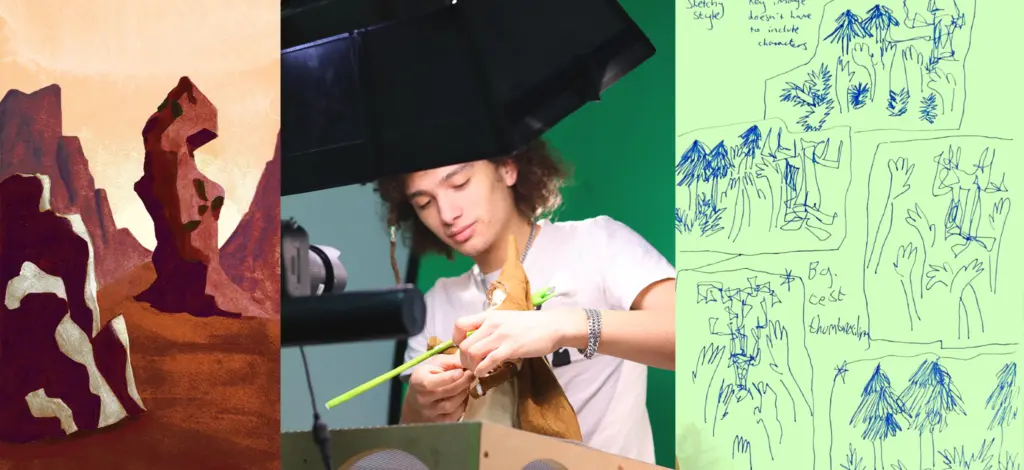
The huge growth in our consumption of media on small-screen mobile devices is changing the landscape for visual content creators.
Overview
What our students do...

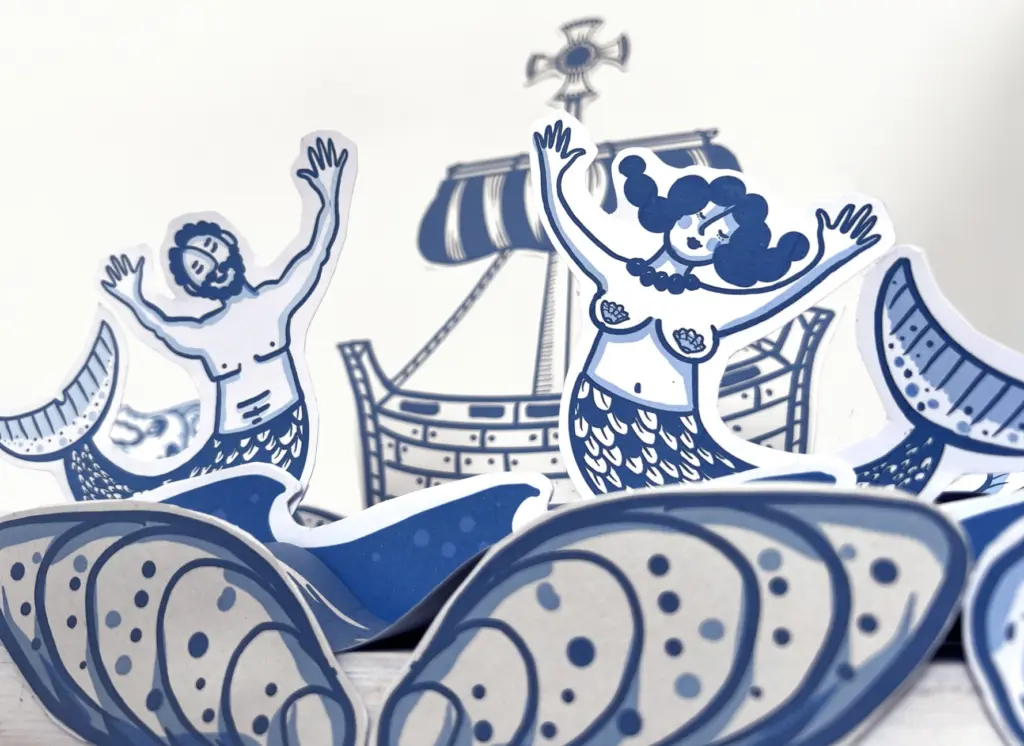
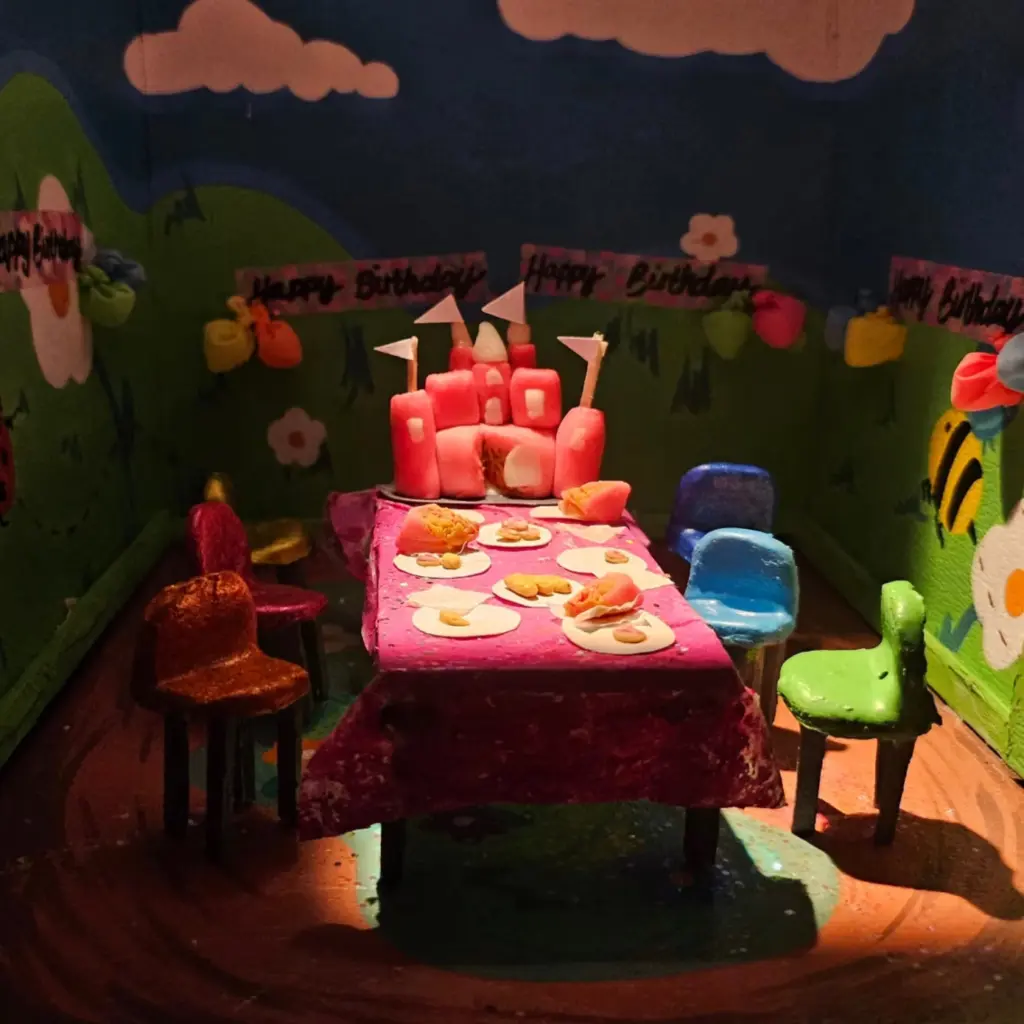
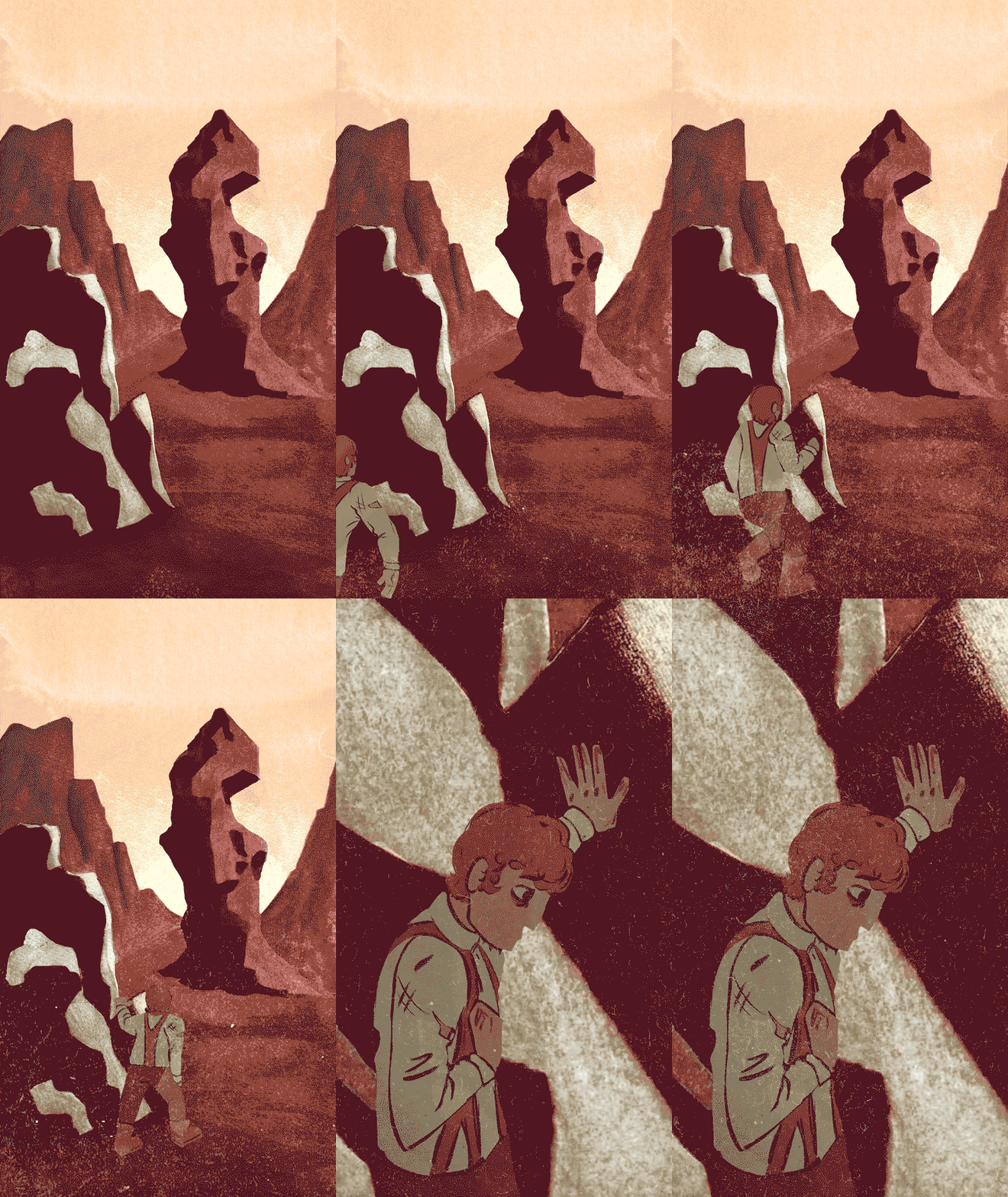


Meet the team

- School of Visual Communication
Neil Hadfield
Course Leader - BA(Hons) Illustration & Animation

- School of Visual Communication
Beth Izatt
Lecturer - BA (Hons) Illustration

- School of Visual Communication
Nicholas Stevenson
Course Leader - BA(Hons) Digital Content Creation

- School of Visual Communication
Gabby Brace-Stevenson
Lecturer - Critical Studies

- School of Visual Communication
Marion Elliot
Lecturer - BA(Hons) Illustration

- School of Visual Communication
Ross Duncan
Course Leader - Games Design
What you will learn
Your course is split down into modules, and into projects within those modules. You will be able to shape those projects around your interests and build a portfolio that feels individual to you.
Tap the sections below to get an overview of the course modules, broken down into years. The module descriptions here are designed to give a sense of the structure of the course, and the indicative content that you will study at HCA - not a list of everything you will cover.
Practice in Context 1
The module provides an introduction to the work of key practitioners in Illustration and Animation, both past and present, across various genres of practice, to give students a broad overview of the historical development of the discipline and of the contexts which enable the work to be understood and assessed.
The range of contexts examined in this module might include:
• Biographical: artist’s intentions and personal factors relevant to understanding the work;
• Historical: political, social and cultural issues being addressed, direct and indirect influences of the historical environment;
• Technological: factors related to development of the technology of creative production;
• Art historical: precedents, influences, and relationships with contemporaries working in the same field;
• Social: relationships, both individual and general, relevant to understanding the work;
• Ethical factors relevant to understanding and evaluating the work;
• Cultural: values and beliefs implicit in the work derived from the cultural environment, intentionally or unintentionally included.
Students will be introduced to the context and genres within which Illustrator/Animators operate and the cultural and social significance of their practice. When appropriate students will be encouraged to relate past work to current issues and practices. "
Practice 1
PART 1:
‘Understanding the Creative Process’
What does it do? What sort of problems do we have to overcome? What is a target audience and why do they matter? How do we adapt our thinking to these identified groups? How do deadlines affect our working process? What works for you? What is a journal, a scrapbook, a sketchbook, reflective feedback, annotation? Why note-taking matters…
From concept to completion. Why do we need problem solvers? Ideas generation. Divergent and lateral thinking techniques. Brainstorming, mind-mapping, what-iffing and PLAY. Where to place emphasis. The usefulness of feedback and client/maker relationships. What is success? How do we define success? How do we measure learning?
‘Visual Communication Principles’
Focal point, contrast, balance, movement, rhythm, perspective and unity. Rule of thirds, golden section, materials choices. Print processes.
‘Elements of Visual Communication’
Space, line, shape, size, patterns, texture and value. Mark making. Drawing, painting (including digital). Print processes. Contemporary context. Case studies including examples and inspirational content. A series of visiting practitioners that support elements of the above. What do contemporary illustrators do? Who commissions them? Authorial illustration and animation.
PART 2:
‘Drawing’
As well as the above, the module will include a substantial drawing course that will be delivered in order to accommodate expected differing levels of existing skills and according to preferred individual ambitions. The activities will be ‘broad’ in the sense that workshops will be designed as ‘core’ activity relevant to a practitioner with a general interest in visual communication especially illustration and animation.
Drawing activities will include:
Life drawing – looking at aspects of figure drawing, including, sketching, proportion, colour, mark making, foreshortening, tone, form and spatial awareness. All students will look at body movement, action, pose, poise and animation through movement.
Landscape drawing – looking at aspects of drawing the landscape from the point of view of a visual communicator. This will include perspective (all forms), weather and atmospheric conditions, urban, rural and imaginary. The short course will include aspects of ‘staging’ where illustrators and animators use landscape as ‘settings’ for action in a variety of contexts (publishing and broadcast).
PART 3:
‘Animation’
There will be workshops in technical aspects of animation. Workshops will include basic knowledge leading to more complex exercises exploring the principles of animation in both a 2D and 3D context.
Practice 2
This module will be primarily concerned with storytelling and students
will receive introductions to aspects of the following:
Picture Books
This aspect of the module will look at illustration and how it is used to supplement reading (‘Illustration is encouragement to read’ Quentin Blake - Hay Festival 2016)
The module will include the study of children’s illustrated literature in a historical, contemporary and global context including (for example) classic texts, successful book series, character design, setting, motive (educational, moral based, instructive, cautionary folk tales etc), authorial, collaborative and innovative practice.
Graphic novels and comics
This aspect of the module will explore the extended visual narrative and interactive narratives (gaming etc). The module will include respect to genre and target audience in a global context with an emphasis on minority interests including both factual and fictional storylines as well as adaptations from classic texts.
Reportage illustration and animation (reporting)
Students will report visually on an external event that records an alternative view to the norm. this could be a sporting, political, specific location/place or activity that has universal interest.
Animation
This aspect will introduce students to the ‘invisible’ (not studio-based feature films) practice of animation (authorial, title sequences, music video, advertising and children’s and adults tv series) including short animations in a historical, contemporary and global context.
Creative writing
Students will have the opportunity to write their own original scripts in a variety of workshop and directed study contexts. This will include character design, character interaction, context, genre, location etc. Collaboration. Students will form occasional writing partnerships and explore their own specialist skills and how to form useful and creative partnerships.
Storyboarding and Editing
Student will explore the impact of editing film and scripts in a historical, contemporary and global context. They will be introduced to Aristotle’s Poetics, editing techniques and narrative structure in a variety of contexts and explore through storyboarding the effective and dramatic use of planning and editing to complete professional standard work.
Students will complete a series of short workshop-based tasks regarding the above and will eventually decide on a specific major outcome in the second half of the module. This will be defined by their course and individual choice through discussion and dialogue with their tutor."
Foundations for Learning
Foundations for Learning serves as an introduction to the entire Arts
School and its approaches to learning and community. Through a variety
of workshops and taught sessions across multiple disciplines, it provides
opportunities to collaborate with peers from different courses. This
module is designed to foster exploration, inspiration, and personal
growth, while building meaningful connections to support you
throughout your studies.
Practice in Context 2
The teaching programme will introduce a number of theoretical approaches which will help students extend their understanding of how creative practice can be critically understood (meaning) and evaluated (value).
Topics to be covered might include:
• Critical reading, writing and thinking
• Reading Illustration as text: semiotics, context, culture and myth
• Meaning, critical perspective, voice and reflexivity
• Image and text: relationship, balance of power, mutual influence
• Theories of style: What is a style? Does style matter?
• Illustration and experience: pleasure, style and the enhancement of
life
• Internet culture: social and cultural impacts of screen-based design
• Illustration and craftsmanship
• Illustration Animation and art: what is Illustration and Animation?
What are its limits?
Practice 3
Part 1: Illustration applications
Students will explore as series of projects that will test their abilities to
utilise their core skills (gained in Level 4) and a variety of contexts.
These may include:
Editorial Illustration - Short deadlines will reflect the profession world of editorial illustration in newspapers, periodicals and online platforms. Students will be directed through an imaginary Art Director and occasionally take on this role
themselves when working in pairs. Outcomes will reflect current
contemporary practice by including animated elements (gifs) and other
online innovations. Software workshops will be designed and included to build students autonomy in all aspects of professional practice including communication, design, developmental work, production and delivery of content.
Book publishing - Similar to the above but looking at book cover design in historical, contemporary and global context
Branding - Students will explore how their characterisation and visualisation skills
could be deployed in arrange of scenarios such as creating visual assets for Festivals or related events. This may include set design, branding, model making, mural design and other related outputs. This aspect of the module may draw on external project briefs and initiatives depending on availability.
Part 2 - Animation applications
Students following the animation pathway will occasionally deviate in order to explore how animation is used creatively to produce music video, advertising products and services, educational contexts with a particular aim at the small interactive screen, although not exclusively.
Students will explore the innovative potential of using digital and nondigital processes to produce expressive and specific outcomes, some of which may be sourced externally from client or competition.
Practice 4
Part 1: Competition & Commission
To work either individually of collaboratively on a single or multiple projects generated from external sources.
The actual outcomes cannot be anticipated with certainty, but they are likely to be sourced locally and according to specific events such as Festivals, both online and location based, plus partnerships with funded community-based initiatives or from clients in the commercial sector.
Engagement with content will, where possible, relate to real world values and problems with particular attention placed on sustainability and equality and diversity.
In addition, it is hoped that there will be opportunities to test existing skills in the public domain by creating and producing workshop activities aimed at children and or progression partner institutions, in order to improve confidence, knowledge sharing, teaching skills, planning and working to a budget with specific deadlines.
It is anticipated that these sorts of activities will supplement content in
the accompanying module Professional Practice 1.
Part 2: Personal Project
To create a portfolio/showreel content that is self-generated, culminating in a screening or exhibition of final outcomes in the public domain (if possible).
In partnership with the teaching team and peer group, individuals will generate ideas for personal projects based on a suitable starting point.
This may be:
• a personal collection of objects or one found in a named
museum or archive;
• an individual’s response to a contemporary local, national or
even international issue that could be explored through an
aspect of visual communication.
All work undertaken in this module will be accompanied by a digital archive/ journal that will describe and archive the creative process. This document will include the original brief(s), primary and secondary research findings, idea development work, discussion and feedback, amendments and improvements and production of final outcomes.
Professional Practice 1
During this module, students will develop professional skills.
Opportunities for professional experience may include, live briefs, individual and group exhibitions, participating in national or international conferences, competitions, curation, commissions, designing and delivering a socially engaged community or schools project or undertaking placements in arts organisations such as arts workshops, art co-operatives, galleries etc.
A series of visiting speakers, ranging from artist to professionals from creative organisations and education, will provide insightful advice into areas such as:
• How to approach individual creative or organisations.
• What different creative professions entail.
• Expectations in the workplace.
• How to plan content for and deliver education / community based art projects.
• Working to client commission/competition briefs.
• Collectives/Collaboration/Networking: Working with other people, How, why, what and when?
Students will document and reflect on their professional work experience(s) and create a multi-media Personal Development Plan with supporting material for summative assessment.
Practice in Context 3
The content of this module differs for each student, as each undertakes a research project into a self-selected topic designed to help them make sense of their own specialist area of studio practice in terms of culture, context and critical theory.
Working closely with an individual supervisor, students are guided to select a research topic that is both manageable and appropriate to their studio interests and are helped both to locate and organise relevant sources and to construct a critical position informed by theory.
The project is an exercise in largely self-directed academic research, but students receive tailored individual support and are given a series of target dates for reaching set stages of the project (e.g., delivery of title and synopsis, first draft, and so on) to ensure they stay on track as they progress towards the final deadline.
Practice 5
Students will be able to select from a range of externally sourced competitions and project briefs according to availability. The options will provide enough choice for students with differing aspirations and specialisms to make informed and relevant decisions, the final outcomes of which will form part of their emerging portfolios/showreels.
In addition to the above, students will source personally generated project briefs with external clients and complete them in possible collaborations with internal partners from their peer group. These ‘personally negotiated tasks/assignments’ will be approved in agreement with the module leader and teaching team.
Choice of outcome (Illustration or Animation or a combination of both) will be at the discretion of the individual and in negotiation with the Module Leader and teaching team.
All students will be expected to submit their work to competition if directly requested.
All work undertaken in this module will be accompanied by a Blog or similar online platform that will describe and archive the creative process.
The Blog will include the original brief, primary and secondary research findings, idea development work, discussion and feedback, amendments and improvements and production of final outcomes.
Practice 6
This final module is designed to provide students with an opportunity to complete their undergraduate studies with a substantial project or projects that will define their practice. This work is expected to form the basis of an exit level exhibition to celebrate their work and provide an opportunity to place their work in the public domain and attract potential clients and employers.
The students will continue to review their progress to date and in negotiation with their tutors create a series of project proposals from which to explore suitable solutions.
By the end of the module each student should have produced the
following:
• Written Brief(s)
• A Schedule
• Evidence of appropriate primary and secondary research activity
• Concept drawings, experiments/, tests, developmental work
• A digital archive/journal
• Completed artwork/prints in a physical and/or digital portfolio or a completed showreel of work
• Other (to be specified by student)
Students may request specialist materials and specific enrichment opportunities (site visits and visiting teachers/practitioners) to support and compliment their study.
There is no limit on the number of projects that may be attempted, but the programme should reflect the study hours assigned to this module and a schedule be created in agreement with the personal tutor. The tasks should include a description of the deliverable content and be based on the proposal document and skills audit created at the end of level 5.
All work undertaken in this module will be accompanied by a digital archive/journal that will describe and archive the creative process. This document will include the original brief(s), primary and secondary research findings, idea development work, discussion and feedback, amendments and improvements and production of final outcomes.
Professional Practice 2
Students will revisit and refine their Professional Development aspirations and produce additional material to support the generation of their graduate portfolio/showreel and artefacts that will supplement their main specialism and may contribute to end of year retail events such as CMYK and/or the Graduation Show. Other facets may include the development of social media and/or web presences, business identity (where appropriate) contributing to their exit strategy and launch of their professional careers.
Students will reflect on and refine their knowledge of:
• The employment landscape
• Copyright Law, licensing, contracts, T&C’s, insurance, taxation, NI, How, why, what and when?
• The differences between Self-employment and permanent employment Proactive/Reactive/business ownership/entrepreneurship
• Ethics, Morality and their career, an overview of how the Media
operates censorship & self-censorship/audience/working
ethically/sustainable choices
• Representation online/ Social Media networking How, why, what and when? Consistency of brand, Effective and appropriate copy, quality of images
• CV writing skills/Letter of introduction writing/application writing skills
• Costing work/funding- writing applications and bids/budgeting Evaluating projects and clients/managing clients and employers
• Further study: Postgraduate courses, Teaching courses
Career paths
Illustration
- Freelance illustrator
- Editorial illustrator
- Children’s book illustrator
- Advertising illustrator
- Creative producer
- Site-specific illustrator
- Illustration agent
- Commercial illustrator
- Packaging illustrator
- Product illustrator
- Brand content designer
- Merchandise designer
Animation
- Freelance animator
- 2D animator
- Stop-motion animator
- Animation director
- Commercial animator
- Character animator
- Motion designer
- Animation director
- Social media video creator
- Animation producer
- Editor
- Short film producer
Comics, character design and visual storytelling
- Character artist
- Graphic novelist
- Character designer
- Storyboard artist
- Visual development artist
- Concept artist
- Comic artist
- Creature designer
- Environment artist
Design, advertising and digital media
- Multimedia designer
- Graphic designer
- Digital media designer
- Digital marketing roles
- Advertising and design roles
Creative business, education and cultural careers
- Studio manager
- Creative director
- Curator
- Exhibition roles
- Self-employed creative practitioner
- Cultural engagement practitioner
- Project consultant
- Teacher
- Creative Educator
- Festival Programmer
- Project manager
Applying to HCA
- Minimum age 18.
- UCAS Points: Applicants applying for September 2025 entry and beyond, should have achieved 96 – 112 UCAS Tariff Points or more. However, whilst qualifications are important, our offers are not solely based on academic results. We may make offers based on other evidence of talent and suitability for the course – for more details about UCAS Tariffs tariff explanation and advice on the UCAS website. We expect all applicants to have examples of their current creative work available for submission on request.
- Mature students: Applications from mature students with relevant experience will also be considered.
If you are unsure or have any questions, please contact us at registry@hca.ac.uk and we can offer further advice on HCA and the UWTSD awarding body requirements.
You can apply to HCA by making us one of your options on your UCAS application. In some cases, such as with current students, student transfers and top-ups, we also accept direct applications.
We receive a high number of application all our subject areas so we recommend that you make your application as early as possible.
You can find out out everything you need about the application process using the link below. If you have any questions, just email registry@hca.ac.uk.
As soon as you apply, our Registry team will be in touch to let you know they have received your application. At this point they will also send out information on portfolios or auditions.
Portfolios and auditions are a chance for you to showcase yourself in a different way. They give us an idea of what excites you about the subject, and what you might want to explore further on the course.
We will send out guidance on how to submit your portfolio, or book and audition date, and if you have any questions you will always be able to reach out to us for assistance or clarification.
After submitting your portfolio online, your work will be reviewed by a course lead, and you will receive personal feedback alongside your offer.
Studying is an investment in yourself, and in your future. It’s important to understand the financial support that is available to you, and to be clear about any fees or funding associated with the course you want to study.
Follow the link below to visit our Fees and Funding pages. These pages are designed to help you plan for your future, so you can start your course with confidence in your financial situation.
Everyone’s personal circumstances are different. If you can’t find the information you need, our Student Finance team can offer additional advice.
Transferring from another degree course/HND/FdA?
Every year we welcome many students joining our courses in Year 2 or Year 3, after starting their studies elsewhere.
If you're thinking making a change, our team can talk you through the process and the entry requirements you would need to meet to study at HCA as a Top-Up student.
During term time, we can also arrange a campus tour so that you can get a feel for the course you would be joining before you start. Follow the link below to read more on the process - or start a conversation with our Registry team and talk through your individual circumstances.
Your degree
All undergraduate degrees at HCA are validated by University of Wales Trinity St David.
You can view a detailed breakdown of the course content in the Key Information Document.
This can be downloaded below.
How to apply
Everything you need to know about applying to HCA - and starting the next stage of your journey as an artist
Apply nowBook an open day
Chat to students. Tour the campus. Drop in on some free workshops. Our Open Days are a great way to get a feel for what makes HCA special.
Book an open day


