Working with industry at HCA: Ways to work with us
Find your way to work with HCA
A live brief brings a real challenge from your organisation into a course. Students explore it as part of their learning, with guidance from their tutors and feedback from you.
You could introduce an audience, a design question, a story or a material challenge. The course team will need to consider how it fits the curriculum and academic timetable.
Your contribution
Explain the challenge, provide useful context and take part in agreed feedback or review sessions.
What to discuss
Learning aims, scope, timescale, expected work, costs and how any work may be used. If you need a finished commercial deliverable, tell us at the outset so we can discuss whether a commissioned project is more appropriate.
Invite students to see your work in context. A visit to a studio, workshop, venue or organisation can reveal the roles, processes and decisions that sit behind a finished piece of work.
Your contribution
An introduction to your setting and the people or activities students could learn from.
What to discuss
Group size, learning purpose, dates, access, supervision and what is practical in your working environment. A longer work experience arrangement will need a separate discussion.
If you have a placement, paid role or freelance opportunity, tell us what the work involves and who it could suit. We can explore its relevance to our students or graduates and the appropriate next step.
Your contribution
A clear description of the role, required skills, location, dates, supervision where relevant, and pay or fee arrangements.
What to discuss
Suitability, application details and how the opportunity could be shared. Placement arrangements will depend on the relevant course and study level.
Additional routes
Help inform course development
What is changing in your field? Share the skills, tools and working practices that matter to your organisation. Your perspective can help course teams consider how learning connects with professional practice.
Explore a project with our staff
Looking for creative expertise for a commission or a shared enquiry? Tell us about the question you want to explore. We can discuss whether there is a fit with staff expertise and current capacity.
Support a student project or showcase
Materials, equipment or financial support can help a project take shape. Talk to us about a specific activity and what your organisation could contribute.
Recent formats for industry collaborations
Participation in regional, national, and international competitions enables students to benchmark their work, receive external recognition, develop resilience, and gain valuable exposure and networking opportunities within the creative industries.
Longer-term partnerships with businesses, charities, cultural organisations, and public sector partners enable students and staff to co-create projects that deliver mutual benefit while addressing genuine organisational or societal needs.
Recent examples include a Arts Council England-funded series of public talks programmed and delivered in partnership with Meadow Arts, and our collaboration with Flaxland investigating sustainable materials for textile design.
Students work on professional briefs set by employers, organisations, or creative practitioners, developing solutions to live authentic challenges while gaining valuable experience of professional expectations, client communication, and creative problem-solving.
Public exhibitions, showcases, screenings, and performances provide students with opportunities to present their work to external audiences, industry professionals, and communities. These experiences develop professional confidence, communication skills, and an understanding of how creative work is curated, produced, and experienced.
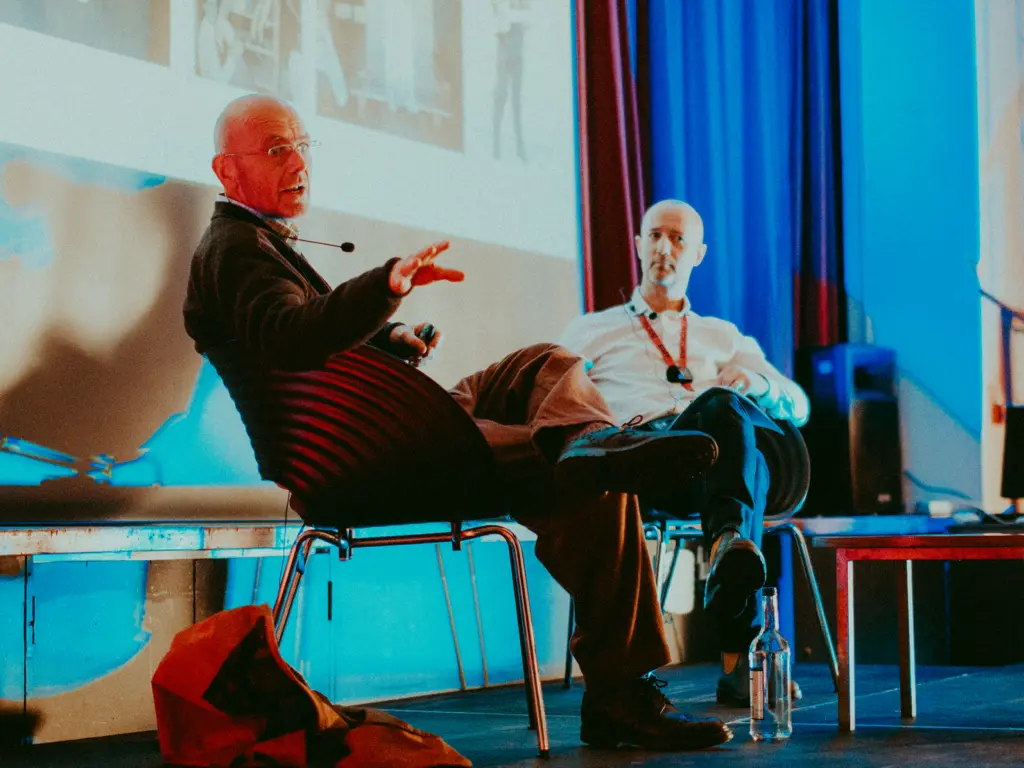
Industry professionals share current practice, knowledge, and technical expertise through talks, demonstrations, and practical workshops, ensuring students gain insight into contemporary creative industries and emerging trends.
Creative projects developed with community groups, charities, and social organisations enable students to use creativity to generate positive social impact, while developing collaborative practice, civic responsibility, and an understanding of inclusive design and cultural participation.
Structured placements, internships, shadowing opportunities, and freelance experiences allow students to apply their learning in professional settings, build confidence, expand networks and develop employability skills.
Visits to studios, agencies, galleries, production spaces, and creative businesses provide students with first-hand experience of professional environments, helping them understand workplace cultures, processes, and career pathways.
Students and staff work with external partners on commissioned creative projects or collaborative research, applying specialist expertise to produce innovative outcomes while strengthening knowledge exchange and professional practice.

Designing for a Global Audience: Graphic & Media Design x Hay Festival
For more than fourteen years, Graphic & Media Design students at Hereford College of Arts have worked with Hay Festival Global, responding to live creative briefs for one of the world's most recognised literary and cultural festivals.
Building Theatre Careers Through Industry Experience: Performing Arts x Birmingham Rep
Students on HCA's Performing Arts course benefit from a long-standing partnership with Birmingham Rep, one of the UK's leading producing theatres.
Forging Community: Artist Blacksmithing x Cart Shed
For Artist Blacksmithing students at Hereford College of Arts, working with Cart Shed goes beyond learning technical craft skills. It’s an opportunity to discover how creative practice can support wellbeing, build confidence, and make a positive difference within the community.
Straight 8 Industry Engagement Case Study Pack
From Hereford to Cannes, through Straight 8, HCA creates extraordinary opportunities that prepare students for careers in the creative industries.
What students gain from working with you
Experience of professional practice
Students work on live briefs, projects, and collaborations that reflect real creative contexts, developing their ability to respond to challenges, manage deadlines and communicate their ideas professionally.
Insight into creative industries and workplaces
Engagement with practitioners and organisations helps students understand different career pathways, professional expectations, and the diverse ways creative practice operates.
Networks and professional relationships
Students build connections with artists, designers, businesses, and organisations, creating opportunities for future collaboration, employment, commissions, and creative partnerships.
Confidence in presenting and sharing their work
Through exhibitions, performances, showcases, presentations, and industry feedback, students develop the ability to communicate their creative ideas to different audiences.
Understanding of creativity in context
Working beyond the classroom enables students to explore how creative practice contributes to businesses, communities, culture, and society.
What happens next
We welcome conversations with organisations interested in collaborating with HCA students, academics and the wider creative community. Whether you have a specific project in mind, would like to explore opportunities to share your expertise, or are interested in developing a longer-term partnership, we would be delighted to start a conversation. Our collaborations are shaped around shared goals and can range from individual projects and creative exchanges to sustained partnerships that support innovation, skills development, and the future of the creative industries.
Get in touch with usFAQs
We collaborate with organisations across the creative industries as well as businesses, charities, cultural institutions, and public sector organisations.
An outline is enough to start a conversation for a specific project. Tell us what you are hoping to explore, who it is for and any dates we should know about.
If you want to talk about a more general partnership - or introduce yourself in case opportunities come up in the future, we would love to start a conversation with you as well. Just reach out to the team via enquiries@hca.ac.uk.
If your idea could involve different disciplines, mention this in your enquiry. We can explore what would be appropriate and practical.
It depends on the activity. A guest session and an extended project involve different kinds of preparation and participation. We will discuss the contribution before anything is agreed.
Some collaborations are integrated into teaching and incur no cost, while others may involve commissioned work or funded projects. [Add the approved distinction between course projects, commissions and other services.]
Projects vary from one-off sessions to longer collaborations embedded within teaching modules.
The first step is simply getting in touch so we can explore opportunities together.
Creative skills have a place in many organisations. Tell us about your challenge and we can explore whether there is a relevant connection with our courses.
Many organisations benefit from creative thinking, design insight, and visual communication skills.
How working with the college can help you
Creative input and fresh ideas
Work with emerging creatives to develop new ideas, solve creative challenges and produce artwork, design, digital content, performances, products, and other outputs for your organisation or project.
New audiences and greater visibility
Use collaboration with HCA to reach new and younger audiences, raise awareness of your organisation, event, exhibition or offer, and generate content for websites, social media, print, and other promotional activity.
Access to emerging talent
Meet and work with students and graduates with a wide range of creative skills. Industry projects, work experience, placements, and live briefs can provide opportunities to identify potential employees, freelancers, volunteers and future collaborators.
Professional opportunities and paid work
Our partnerships can create opportunities for artists, practitioners and creative businesses to deliver workshops, lectures, commissions, performances, projects, and other paid professional activity.
Networks, knowledge and collaboration
Connect with HCA staff, students, graduates, and other industry partners, opening up opportunities for new relationships, referrals, commissions, collaborations, and knowledge exchange.
Support for engagement and funding objectives
Working with HCA can help organisations engage young people and local communities, broaden participation, develop educational activity and, where relevant, contribute to the engagement and participation associated with funded projects.
Access to creative spaces, equipment, and expertise
Depending on the partnership, organisations can benefit from HCA's specialist facilities, equipment, creative expertise, and learning environment – creating opportunities that may not otherwise be available.
Our people in practice

Nicholas Stevenson
I am an award-winning artist, illustrator, designer, animator, songwriter and digital content creator. I enjoyed studying my BA at Hereford College of Arts and have returned to teach alongside my creative practice.

Dr Sarah Scarsbrook
Dr Sarah Scarsbrook - Partnerships & Business Development Manager

Nicola Lillie
Nicola joined as Jewellery Design lecturer in January 2024, and has taught on HCA's silversmithing short-courses since 2020. Nicola graduated in 2015 with a first class bachelor's degree in contemporary design, and has held her contemporary jewellery business since; working for galleries and to commission alongside teaching.

Anna Lines
Currently an MA Dance Research student at Rambert School of Ballet and Contemporary Dance, Anna's work is highly physical, emotionally charged, and explores the strength and fragility of human existence. Anna 's alumni have performed internationally with high profile companies including Gary Clarke Dance Company and Motionhouse Dance Company.

Innes Jones
Innes is an award-winning graphic designer, passionate about design education. Currently working freelance for a number of UK design agencies he previously ran his own Graphic and Media design company which specialised in delivering personal, social and health education solutions through media arts projects.

Del Done MBE,CWCB
Head of School of Materials and Design, BA(Hons) Artist Blacksmithing Course Leader & MA Contemporary Craft Course Leader

Dr Daniel Pryde-Jarman
Dr Daniel Pryde-Jarman is an artist, curator and writer who has taught art and design subjects at several Universities, including the University of Brighton and Coventry University. He holds Masters degrees in Fine Art and Critical Writing & Curatorial Practice, and completed a practice-based PhD in Curatorial Practice in 2013.

Ash O'Brien
Ash graduated in 2008 with a degree in Graphic Communication and has since been active in the industry; having set up his own design partnership specialising in branding. He loves how the industry work and teaching fuel one another, and how his experiences help benefit student learning.

Ross Duncan
Ross Duncan - Course Leader for Games Design at Hereford College of Arts